myRentokil
Manage your business
Climate change is affecting pest behaviour, causing dramatic spikes in rodent and insect infestations worldwide. To combat these evolving threats, businesses must shift from traditional methods and simply reacting to infestations to advanced, technology-driven solutions for more proactive prevention. Rentokil’s next-generation, AI-powered cameras offer 24/7 monitoring to accurately identify, count, and track pests in real time. This ensures rapid intervention to resolve pest activity more quickly and provides unprecedented visibility to protect premises against complex infestations.
Climate change has been a global hot topic for decades, forcing businesses, governments, and individuals to rethink how they protect the future. But while we’re flooded with headlines about rising sea levels and shifting weather, there’s one critical impact you might have overlooked: what climate change is doing to pest behaviour in our modern world.
Our data from across global markets shows that extreme weather events are completely rewriting traditional pest patterns. For instance, a severe drought in Southern Europe drove a 33% year-on-year increase in rodent control visits in Milan and Turin as drying natural water sources pushed pests indoors for survival. Similarly, following severe wildfires and heat in Greece, rodent infestations spiked by 144% in just a single month as they rapidly adapted to the destruction of their habitats.
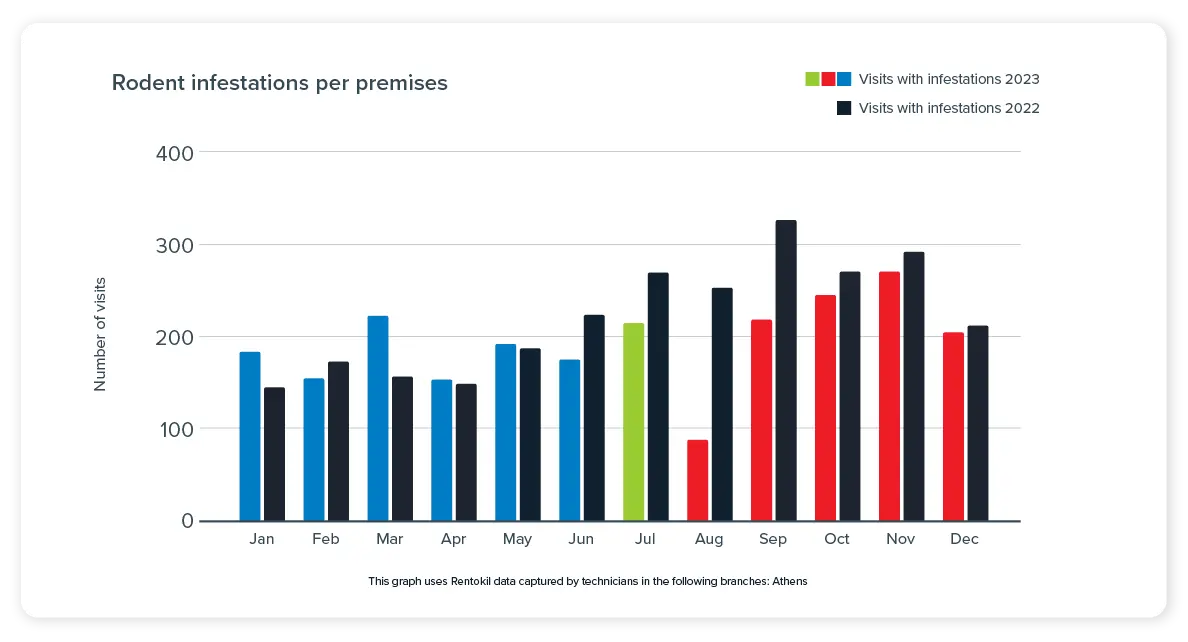
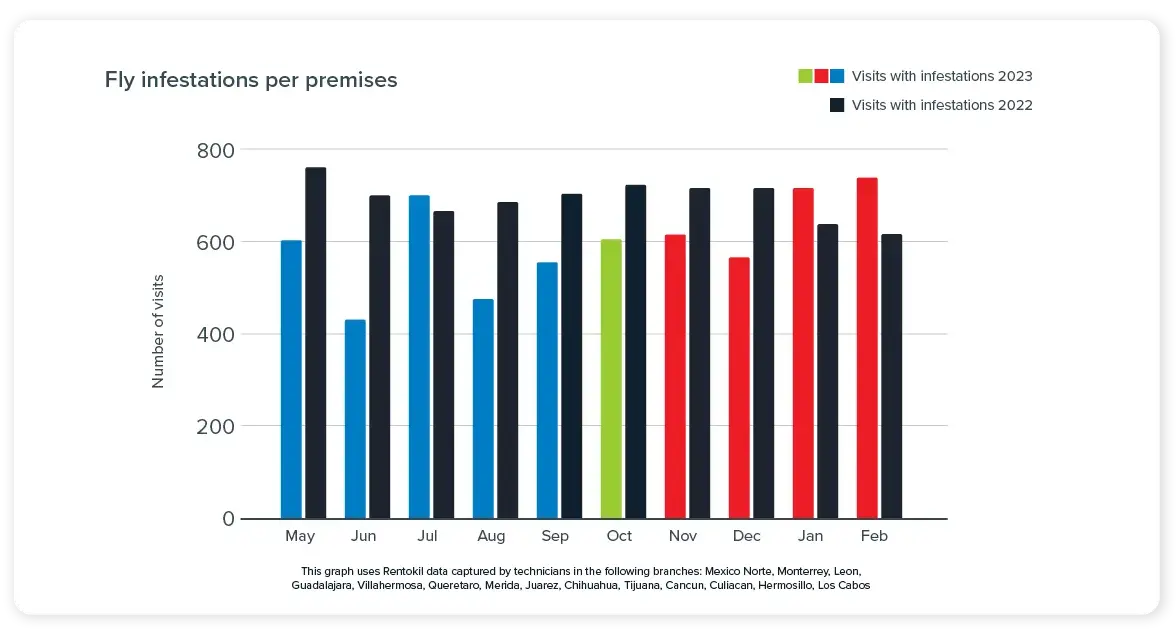
It isn't just rodents, either; fly infestations jumped 19% over a four-month period following Hurricane Otis in Mexico, shattering previous downward trends. With research indicating that a mere 2°C increase in temperature can cause some insects to go through up to five extra life cycles a year, the baseline for pest volumes is shifting.
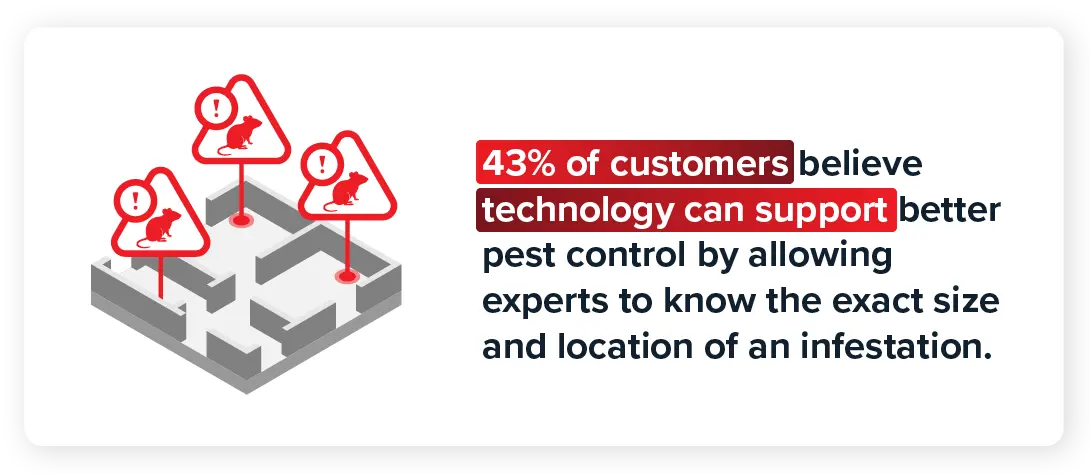
As climate change continues to influence pest behaviour and patterns, the need for innovative pest management solutions has never been more urgent. By partnering with forward-thinking pest control providers that leverage the latest technology, businesses can ensure they remain protected in an ever-changing environment. In fact, 43% of customers believe technology can support better pest control by allowing experts to know the exact size and location of an infestation.
In the past couple of decades, numerous technological advancements have helped the industry stay ahead of pests. These have included:
Now, AI is helping take pest-control camera technology to the next level — identifying pests from photos and even automatically raising alerts for activity. Small and discreet, these next-generation cameras can be integrated with bait boxes, crawling insect traps or insect light traps. They can also be used for stand-alone rodent environmental monitoring, where they can be strategically placed in high-activity or difficult-to-access internal locations, giving pest control experts never-before-seen visibility on rodents at a customer site.
AI is replacing the need for technicians to manually examine glueboards. An environmental monitoring camera is set up to focus on the glueboard inside an insect light trap. Machine-learning algorithms then identify and count the insect pests on the glueboard. This visibility means AI can swiftly and accurately identify and count a range of pests in images. It allows data to be captured automatically for quicker insights and trend analysis.
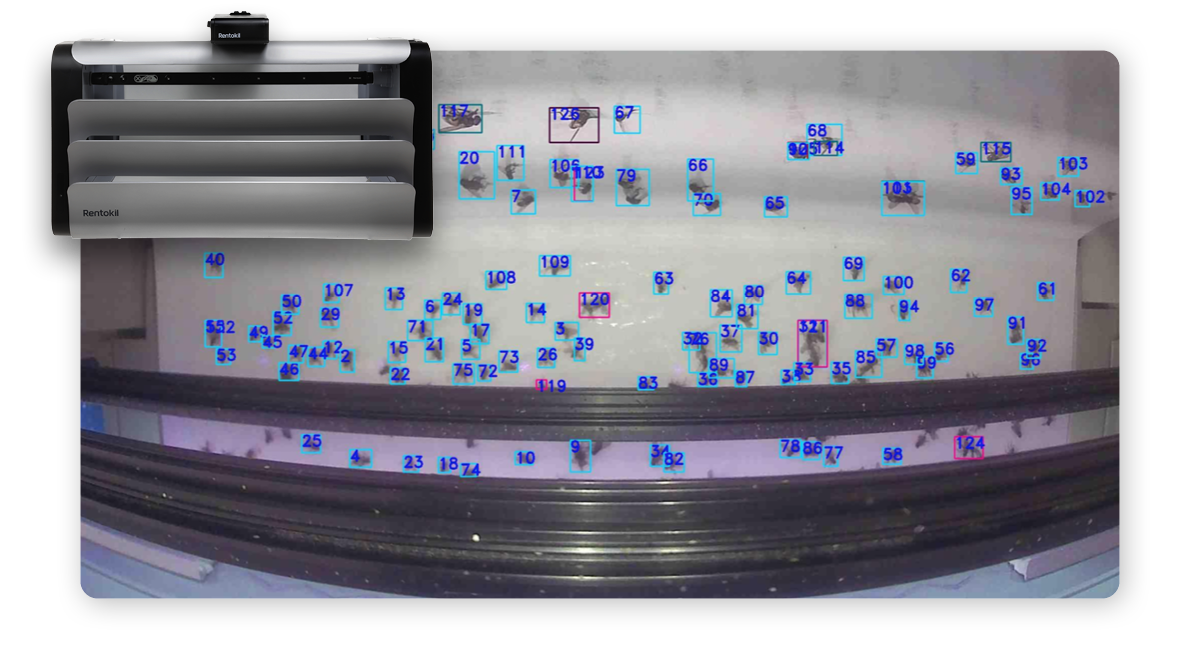
This machine-learning technology is just as effective at identifying rodents. It accurately identifies and labels rodents in open spaces and helps avoid false positives by annotating images with bounding boxes that highlight detections.
Cameras are fitted with a passive infrared (PIR) sensor that detects rodent movement, which can be useful if the sensor happens to be triggered by something other than a warm-blooded rodent, such as HVAC units or lighting.
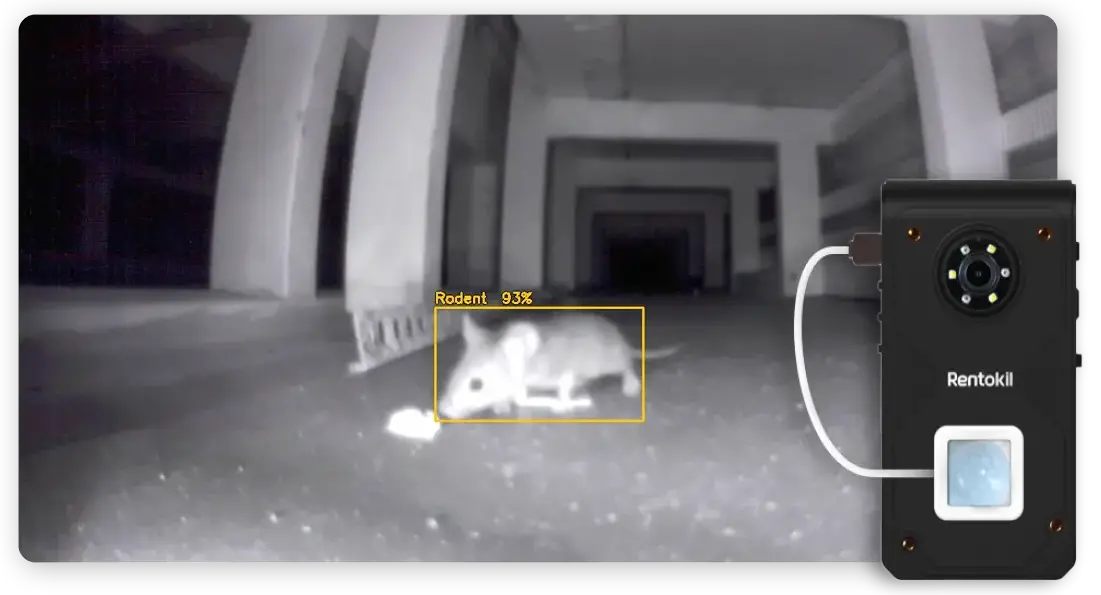
Some advanced systems even provide a confidence rating to images captured by pest-control cameras. If the rating exceeds a certain threshold, technicians can be automatically alerted to intervene. This ensures that only high-probability pest activity triggers alerts, enhancing efficiency and preventing unnecessary disruption at customer sites.
This technological progression, from non-connected methods to AI-powered solutions, dramatically reduces the time from detection to intervention. The visual below illustrates this evolution.
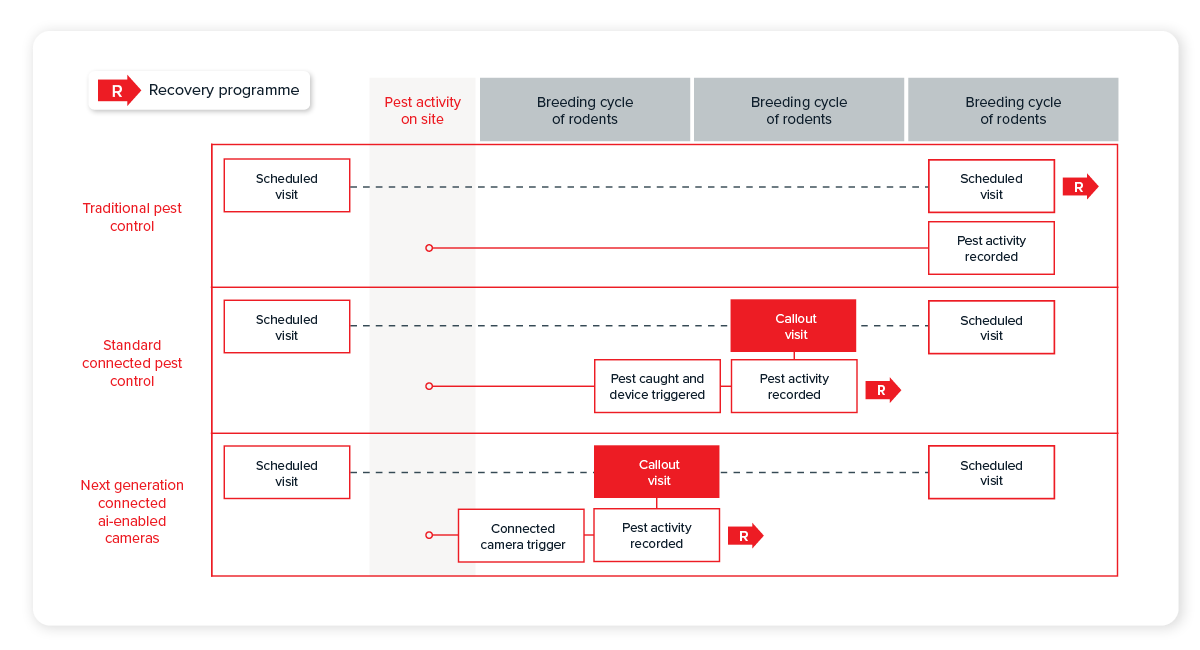
These cutting-edge cameras for rodent monitoring are highly effective across various pest control scenarios, such as:
Looking ahead, climate change is expected to intensify, leading to more frequent and severe weather events, as well as rapidly changing and increasingly frequent pest activity. Now more than ever, businesses need to be on watch for pests, but by leveraging the latest technology that provides unparalleled visibility, they don’t have to be.
Ready to see how the next generation of pest control can transform your defence? Learn more here.
Ideal locations for camera placement include ceiling and roof voids, wall and floor voids and high-risk areas that are often unmanned, such as server or electrical rooms. Cameras are also effectively deployed under chillers or racking, where rodent activity is likely but difficult to monitor continuously with traditional means. These strategic placements ensure comprehensive coverage (while preventing any accidental images of humans being captured) and enhance the ability to detect and manage pest activity in challenging environments.
No. PestConnect Optix, our AI-powered cameras, use machine learning algorithms to automatically filter out blank images or footage with nothing of interest. This ensures that only relevant photos showing actual activity are flagged.
Advanced systems like PestConnect Optix are GDPR compliant and compliant with global privacy laws. PestConnect Optix is built with a ‘data privacy by design’ approach, making it fully GDPR compliant and ISO 27001 certified. It features automated privacy blurring that instantly masks human faces and bodies if they are ever captured. This ensures your data is secure and compliant with the highest international data protection standards.
The most established digital pest control system worldwide